Discover Corvo, Azores
The Island at the Edge of the Atlantic
Welcome to Corvo
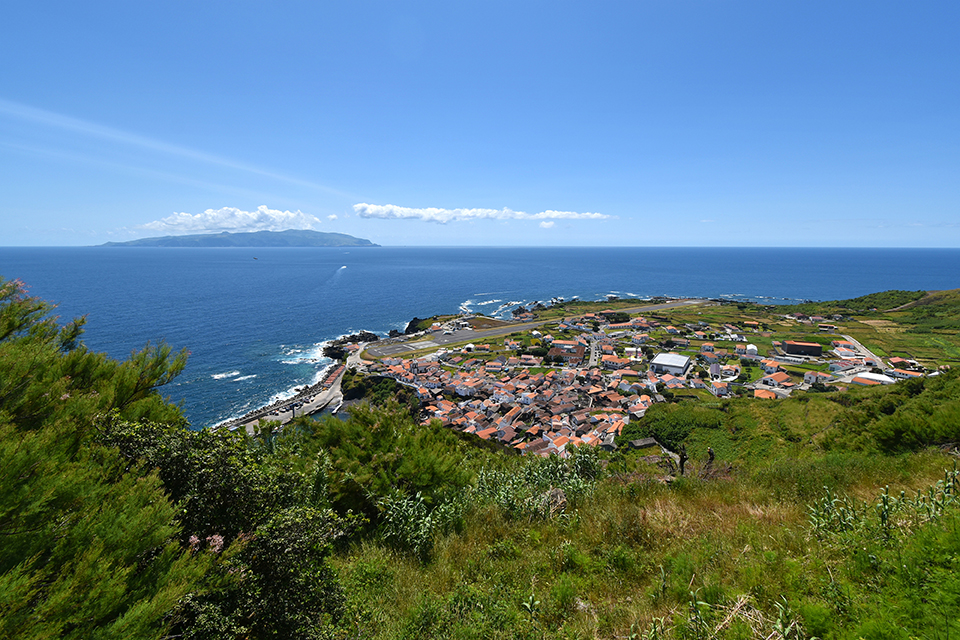
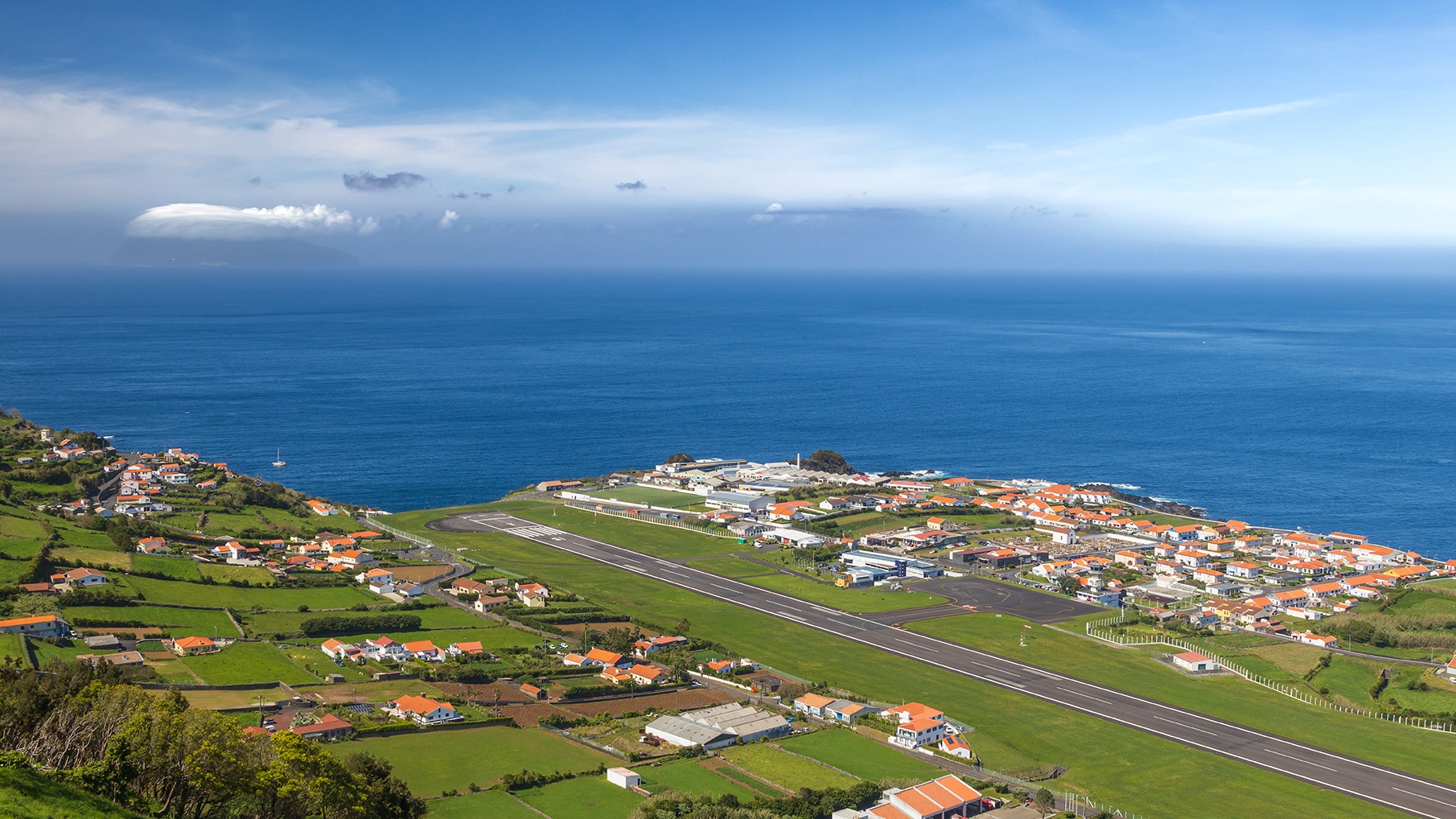
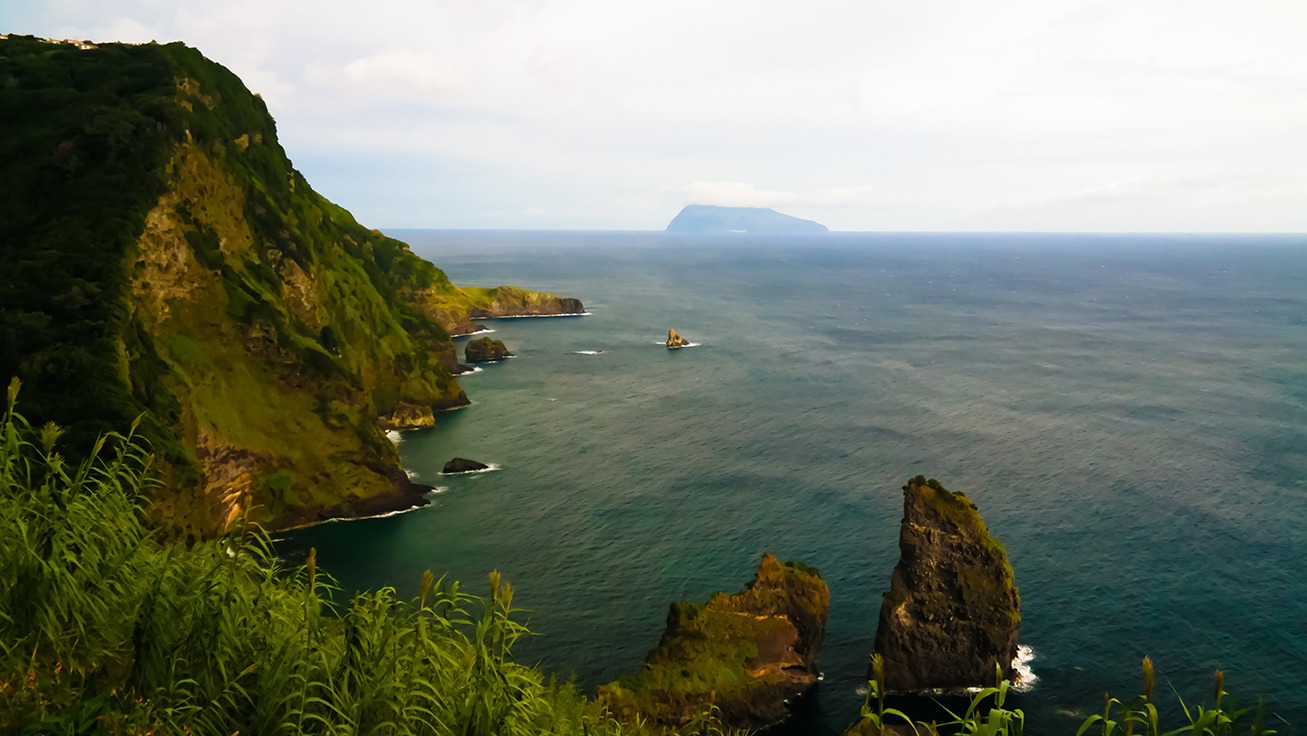
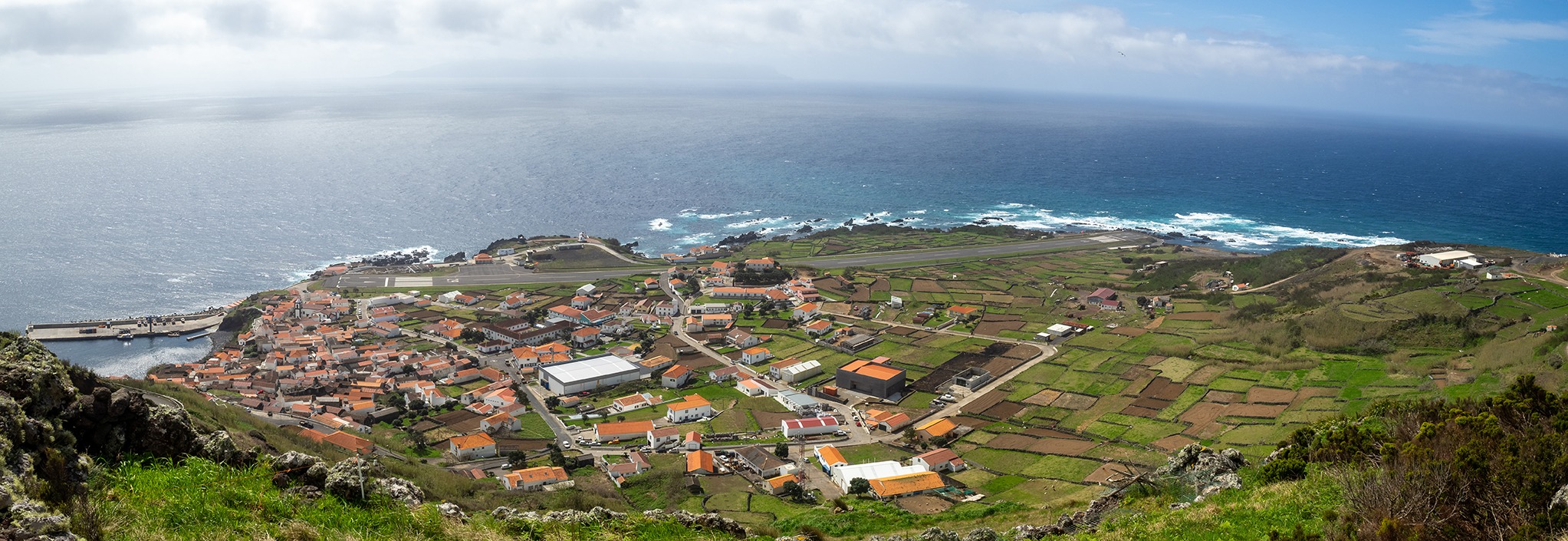
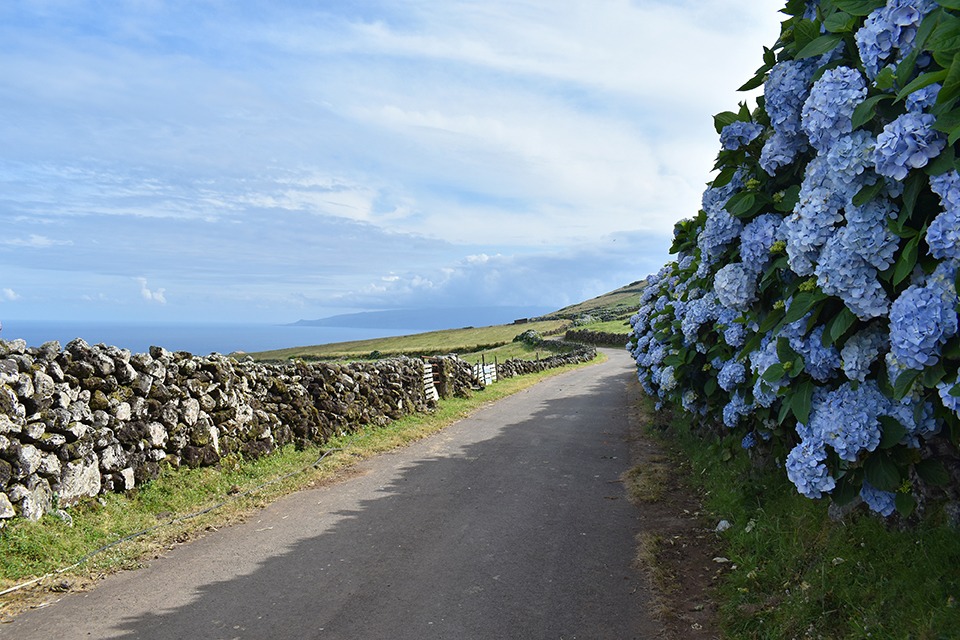
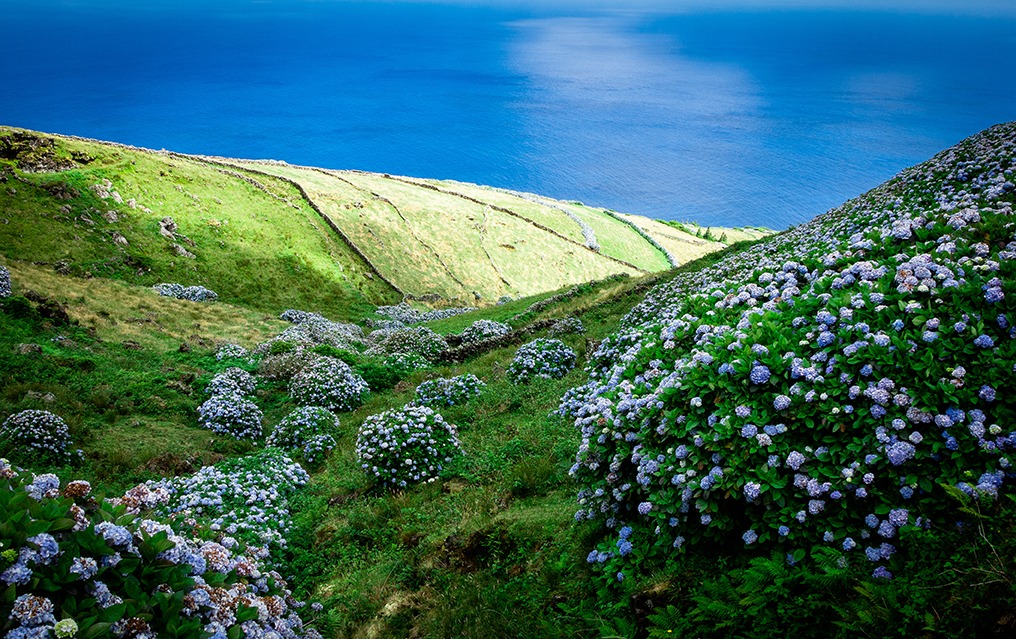
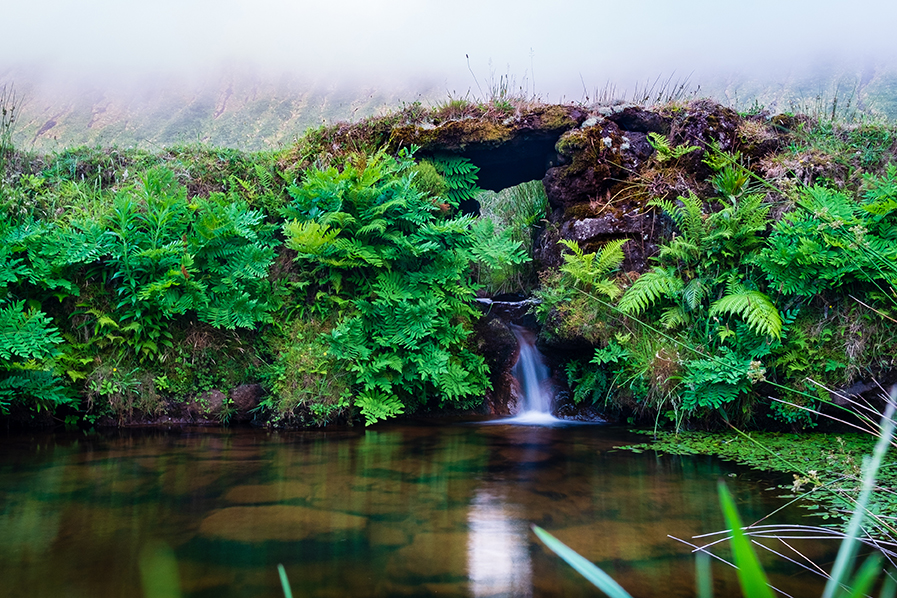
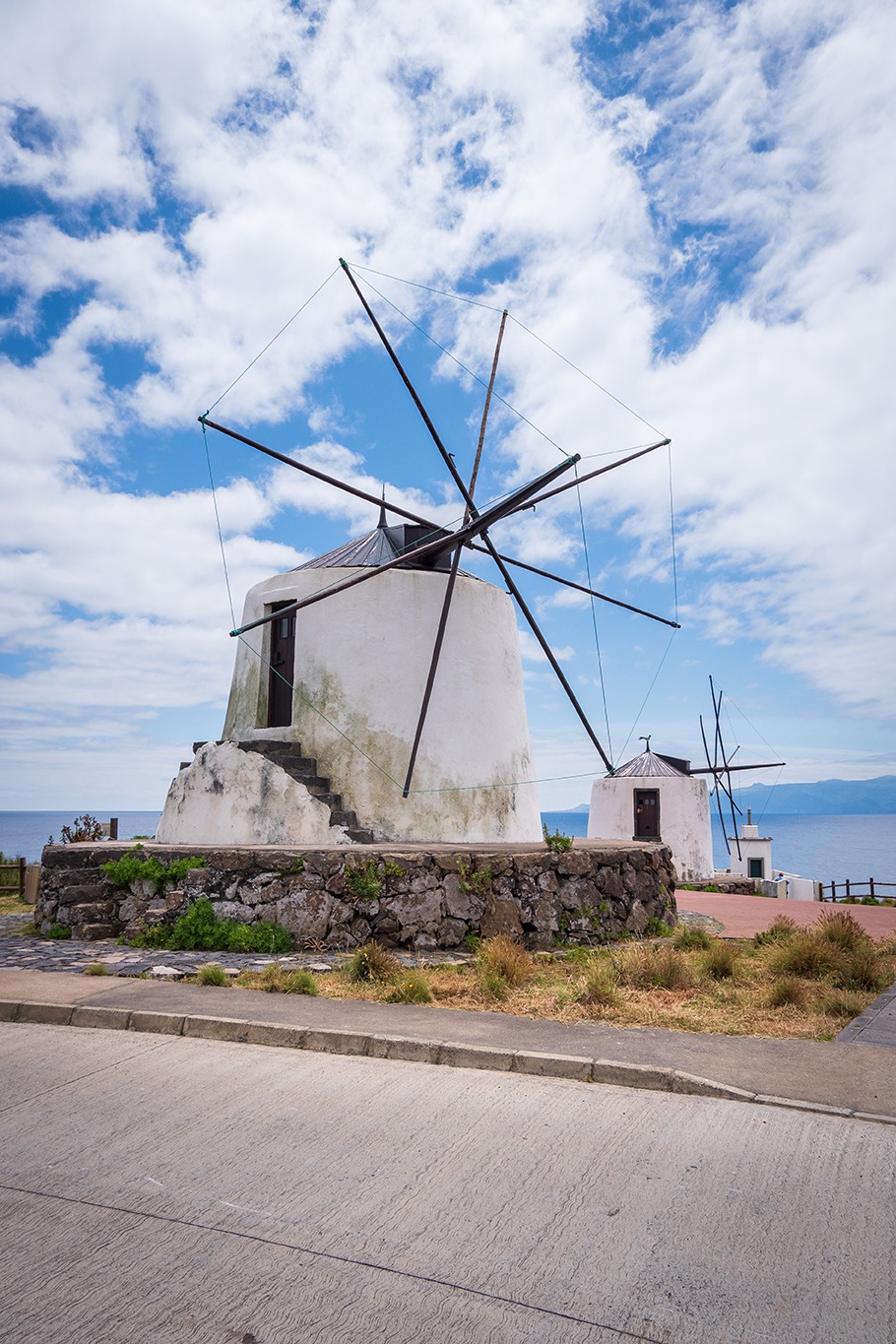
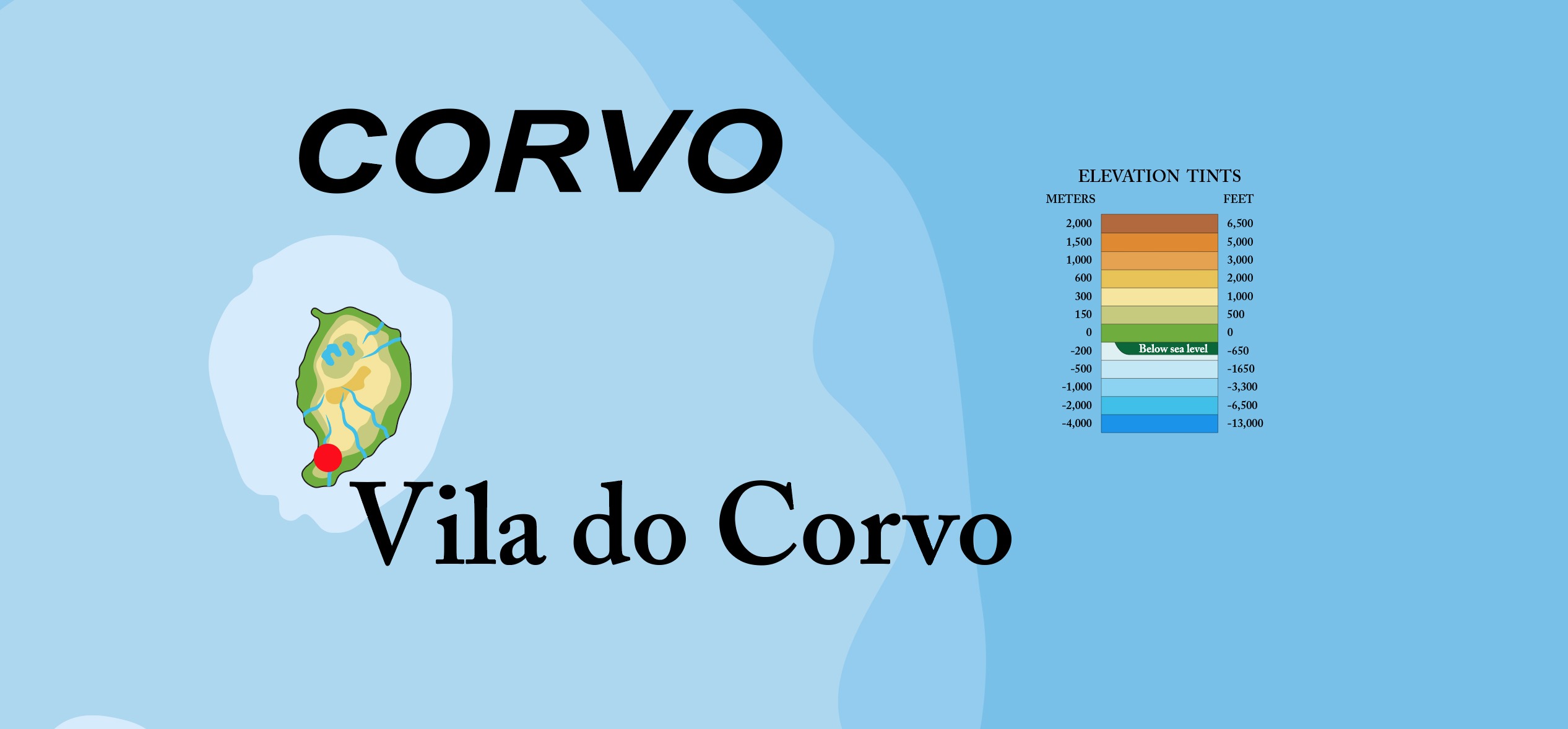
Some places are measured by their size. Corvo is measured by its spirit. At just 17 square kilometers (6.6 square miles), Corvo is the smallest island in the Azores—and the smallest municipality in Portugal. Yet visitors quickly discover that what the island lacks in size, it more than makes up for in character.
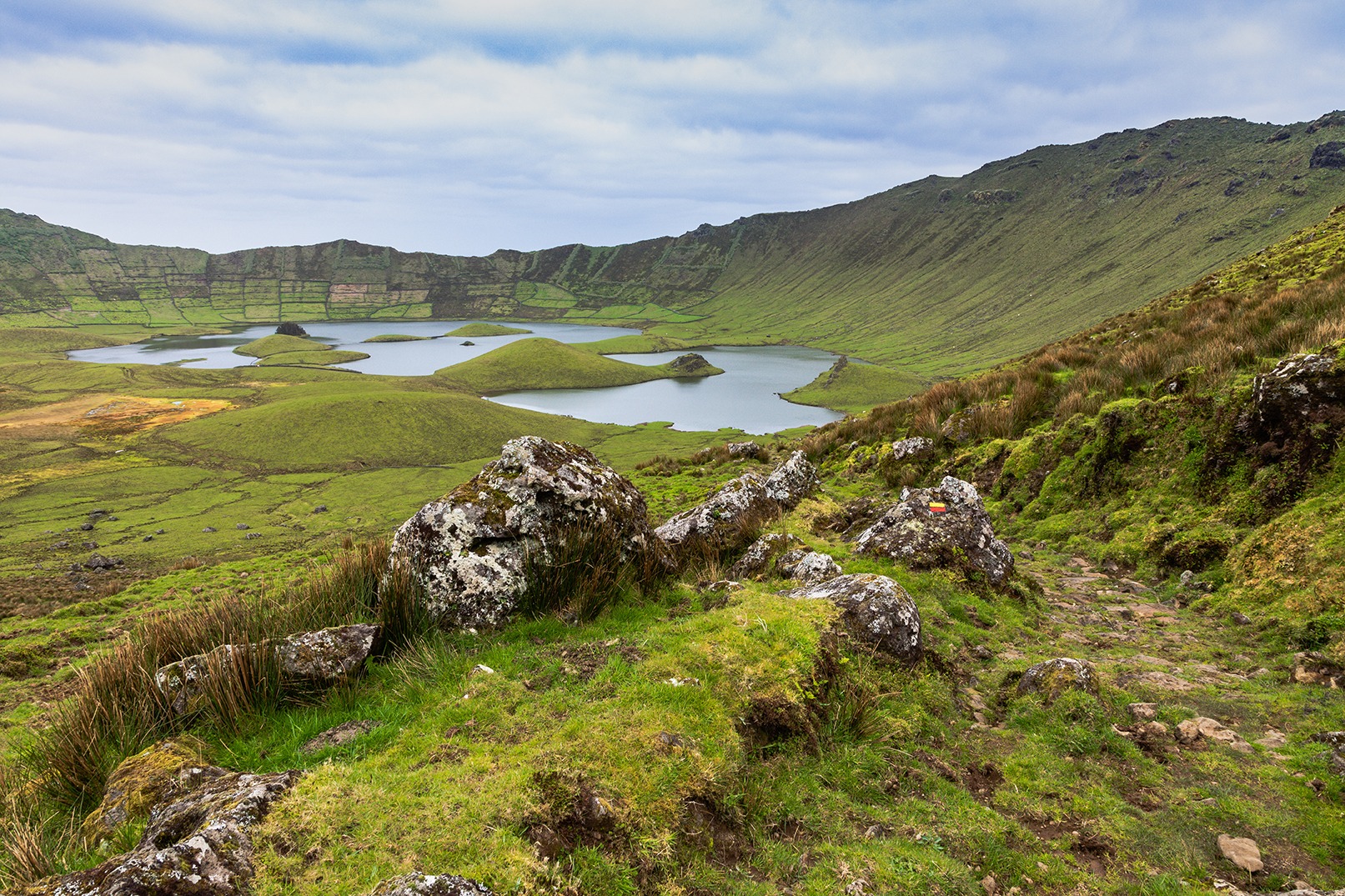
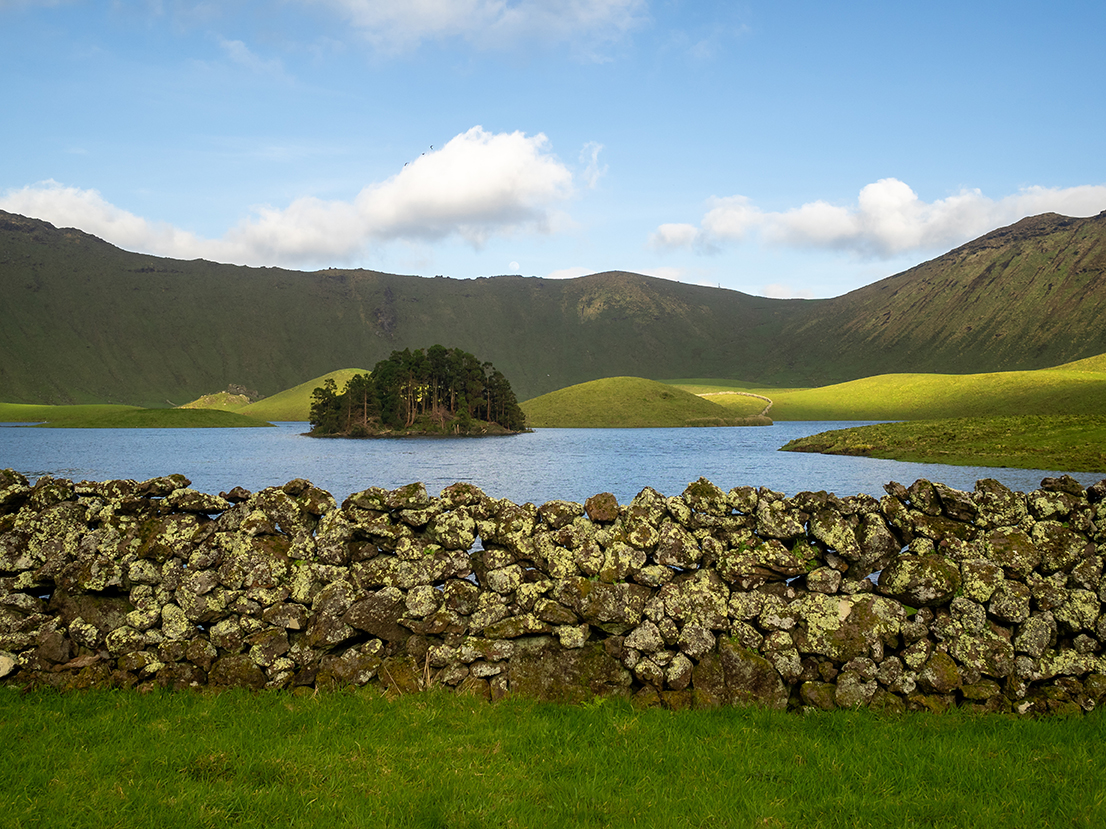
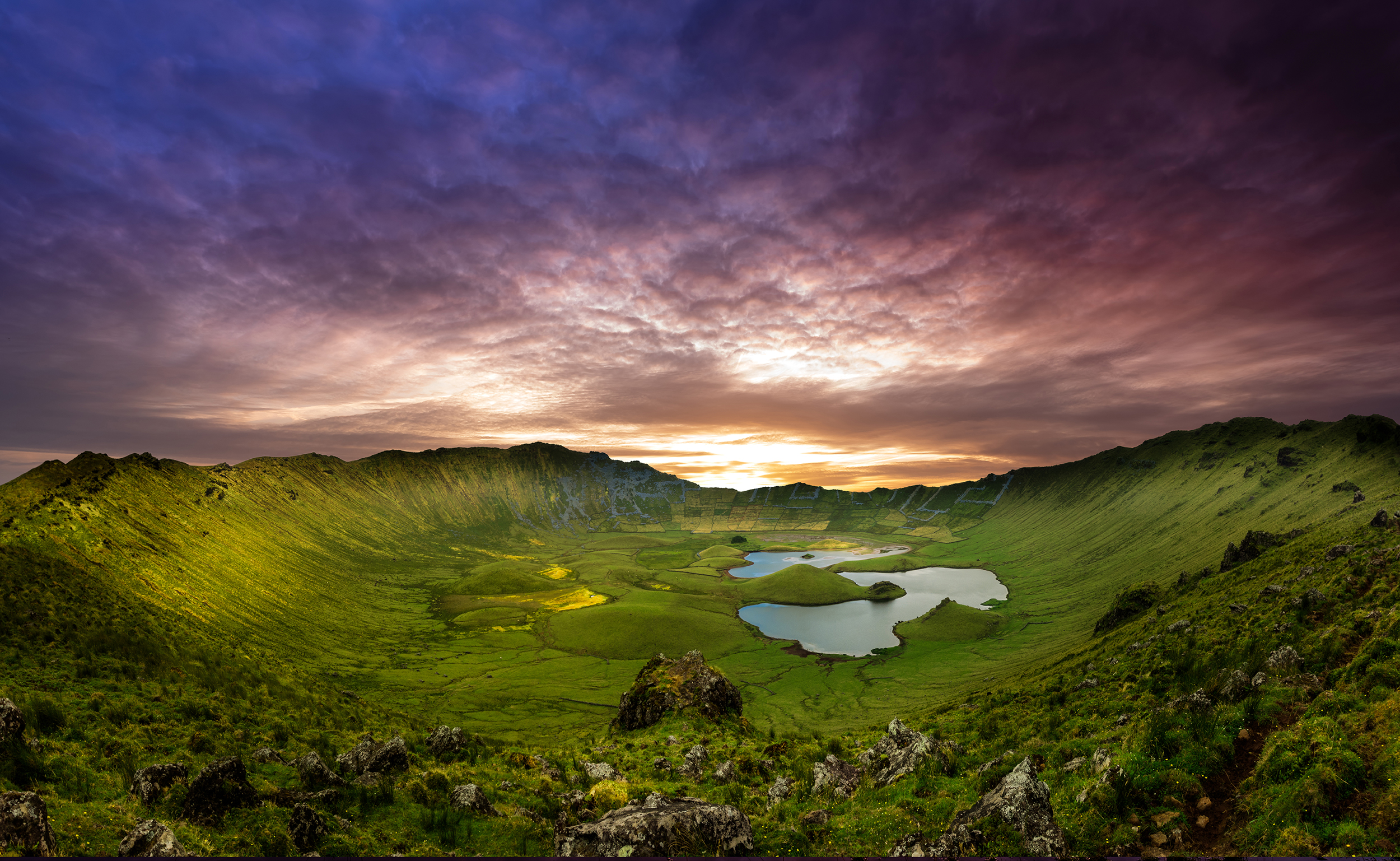
Here, there is just one village. Neighbors know one another by name. The Atlantic surrounds you in every direction. Life moves according to the rhythms of nature, not the demands of a schedule. Above the village rises Caldeirão, one of the most breathtaking volcanic craters in the Azores. Its enormous green basin, dotted with small lakes and miniature volcanic cones, creates a landscape that feels almost untouched by time.
For birdwatchers, Corvo is legendary. Its position at the western edge of Europe makes it one of the continent’s premier locations for spotting rare migratory birds arriving from North America. Every autumn, bird enthusiasts travel from around the world hoping to see species found nowhere else in Europe. But Corvo’s greatest attraction isn’t a landmark. It’s a feeling. A feeling of simplicity. Of community. Of stepping into a place where the pace of life remains wonderfully unchanged.
Some visitors arrive on a day trip from Flores. Others stay longer, discovering that Corvo rewards those willing to slow down. Nearly everyone leaves wishing they had stayed just a little longer.
Welcome to Corvo.
Why Visit Corvo?
Corvo offers an experience unlike anywhere else in the Azores.
Its spectacular volcanic crater, dramatic ocean views, welcoming community, and remarkable sense of tranquility make it one of the archipelago’s most memorable destinations.
Spend the morning exploring Caldeirão, wander through the island’s single village, enjoy fresh seafood overlooking the Atlantic, and finish the day watching seabirds soar above rugged cliffs stretching toward the horizon.
Corvo isn’t about checking attractions off a list.
It’s about experiencing a way of life that has remained closely connected to nature, family, and community for generations.
Island Snapshot
A Brief History
Corvo’s isolation has always shaped its story.
Settled during the fifteenth century, the island’s small population depended on farming, fishing, and cooperation to survive in one of the most remote corners of the Atlantic. Limited land, powerful storms, and geographic isolation required neighbors to work together, creating a close-knit community that continues today.
Unlike many larger islands, Corvo developed around a single village, Vila do Corvo, where life remains centered on family, tradition, and mutual support. Stone homes, narrow streets, and whitewashed buildings preserve much of the island’s historic character.
Although many residents emigrated during the twentieth century, especially to North America, strong family connections remain. Returning descendants often describe Corvo as a place where their family’s history still feels close enough to touch.
Today, visitors experience an island that has embraced modern conveniences while preserving the qualities that make it unlike anywhere else in the Azores.
Did You Know?
- Corvo is the smallest inhabited island in the Azores.
- It is also Portugal’s smallest municipality.
- The entire population lives in a single village: Vila do Corvo.
- Caldeirão is one of the most spectacular volcanic craters in the Azores.
- Corvo is internationally recognized as one of Europe’s finest birdwatching destinations.
- The island lies on an important migration route between North America and Europe.
- On clear days, neighboring Flores appears just across the channel.
Getting Around
Corvo is wonderfully simple to explore.
Most visitors arrive by a short flight or ferry from Flores. Once on the island, nearly everything can be reached on foot, although local taxis are available for the drive to Caldeirão. Walking is the best way to experience Corvo.
The village is compact, welcoming, and easy to explore, while hiking trails lead through open countryside toward breathtaking viewpoints overlooking the Atlantic.
Distances are measured in minutes.
Memories last much longer.
If You Only Have One Day...
Begin your morning in Vila do Corvo, strolling through its narrow streets and enjoying coffee in the village before heading to Caldeirão, the island’s spectacular volcanic crater. Spend time walking along the crater rim, admiring panoramic views of the lakes below and the Atlantic stretching in every direction.
Return to the village for lunch featuring fresh local seafood before exploring the waterfront, chatting with residents, and visiting the small harbor where life has centered for generations. If time allows, end your visit at one of the island’s western viewpoints, watching seabirds glide over the cliffs while Flores rises across the water.
You’ll leave having seen the island.
But you’ll remember how it made you feel.
Natural Wonders
Corvo may be the smallest island in the Azores, but its landscapes are among the most remarkable.
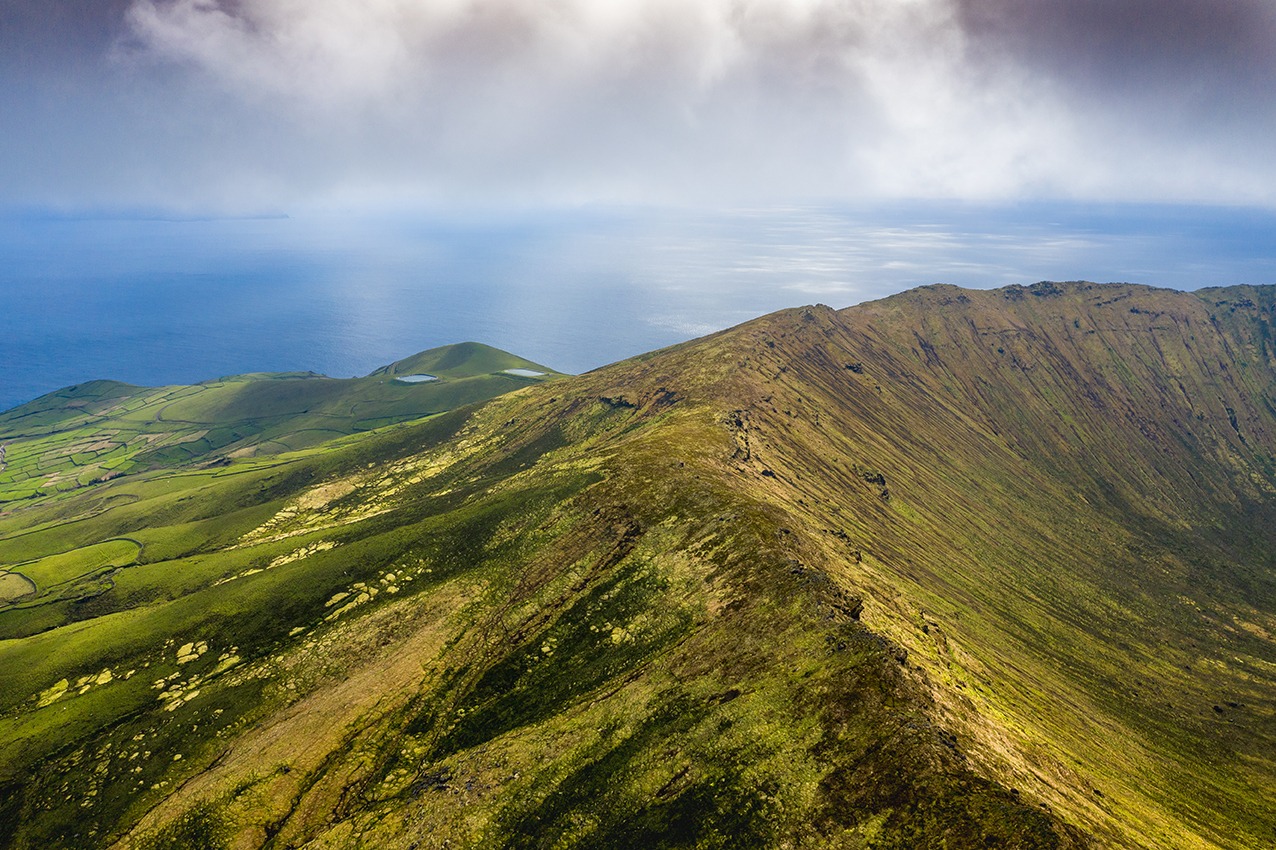
The island is dominated by Caldeirão, an immense volcanic crater nearly two kilometers (1.2 miles) across. Standing on its rim, visitors look down upon a breathtaking green basin dotted with small lakes and volcanic cones that many say resemble the nine islands of the Azores. Whether or not the resemblance is intentional, the view is unforgettable.
Clouds often drift silently across the crater, changing the light from one moment to the next. On sunny days, the rich greens contrast beautifully with the deep blue Atlantic surrounding the island. In misty weather, the landscape takes on a quieter, more mysterious beauty.
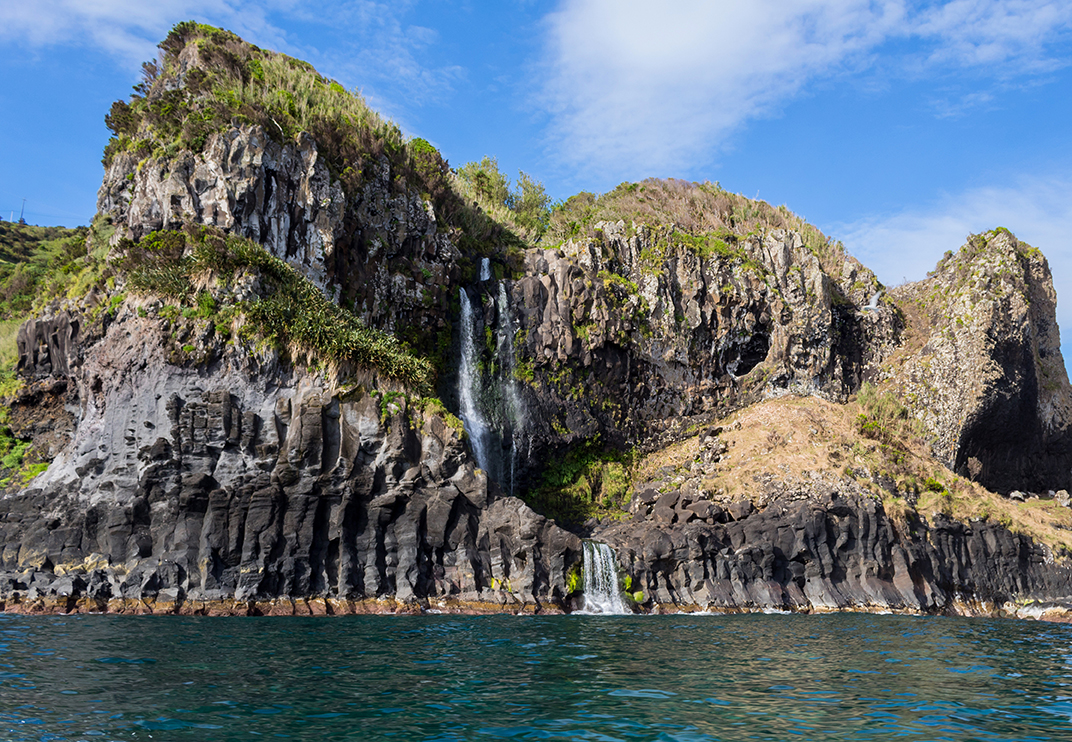
Beyond Caldeirão, Corvo’s dramatic cliffs plunge into the Atlantic, where seabirds nest among rugged volcanic rock formations. Rolling hills covered in pastureland stretch toward the island’s single village, creating peaceful landscapes that have changed little over the centuries.
Despite its small size, Corvo supports an impressive variety of native plants and birdlife, reflecting its importance as part of the Azores’ unique ecosystem.
Here, nature doesn’t need grand scale to leave a lasting impression.
Its beauty lies in its simplicity.
Outdoor Adventures
Corvo is an island best explored on foot.
Walking allows visitors to appreciate the quiet rhythm of island life while discovering landscapes that feel wonderfully untouched. The hike around Caldeirão is the island’s signature experience, offering panoramic views of the volcanic crater, surrounding countryside, and endless Atlantic.
Several footpaths lead across open pastureland, connecting viewpoints that overlook dramatic sea cliffs and neighboring Flores. Although Corvo’s trails are generally shorter than those on some larger islands, every walk offers exceptional scenery and a sense of peaceful isolation.
Birdwatching is one of Corvo’s greatest outdoor attractions. During autumn migration, bird enthusiasts from around the world visit the island in search of rare North American species carried across the Atlantic by seasonal winds. Even outside migration season, seabirds and native species provide excellent wildlife viewing opportunities.
The surrounding ocean also invites exploration. Depending on weather conditions, visitors can enjoy boat trips around the island, observe marine life, or simply relax beside the harbor watching fishing boats come and go.
Adventure on Corvo isn’t measured by distance.
It’s measured by how connected you feel to the landscape around you.
Towns & Villages
Unlike every other island in the Azores, Corvo has just one community. Vila do Corvo is the island’s only village and the smallest municipal seat in Portugal. Whitewashed homes, narrow streets, flower-filled gardens, and traditional stone buildings create a welcoming atmosphere where visitors quickly feel less like tourists and more like guests.
Life here revolves around community.
Children play in the village square, neighbors stop to chat, fishing boats return to the harbor, and church bells continue traditions that have marked the passing of time for generations.
Small cafés and family-owned restaurants provide opportunities to enjoy local cuisine while meeting residents who are often happy to share stories about island life.
Because the village is compact, every walk becomes an opportunity to notice the details—carefully maintained gardens, colorful doors, Atlantic views at the end of every street, and the quiet charm that defines Corvo.
The village isn’t simply where people live.
It is the heart of the island.
Along the Coast
Corvo’s coastline is rugged, dramatic, and constantly shaped by the Atlantic.
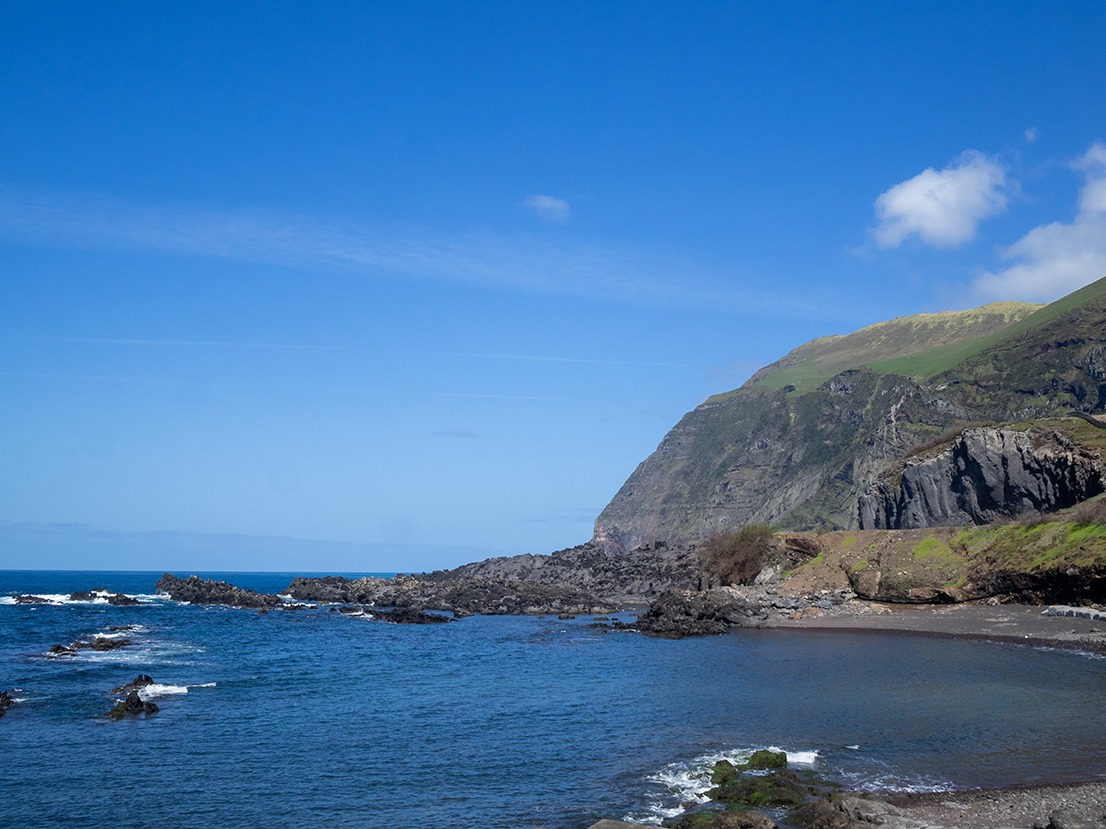
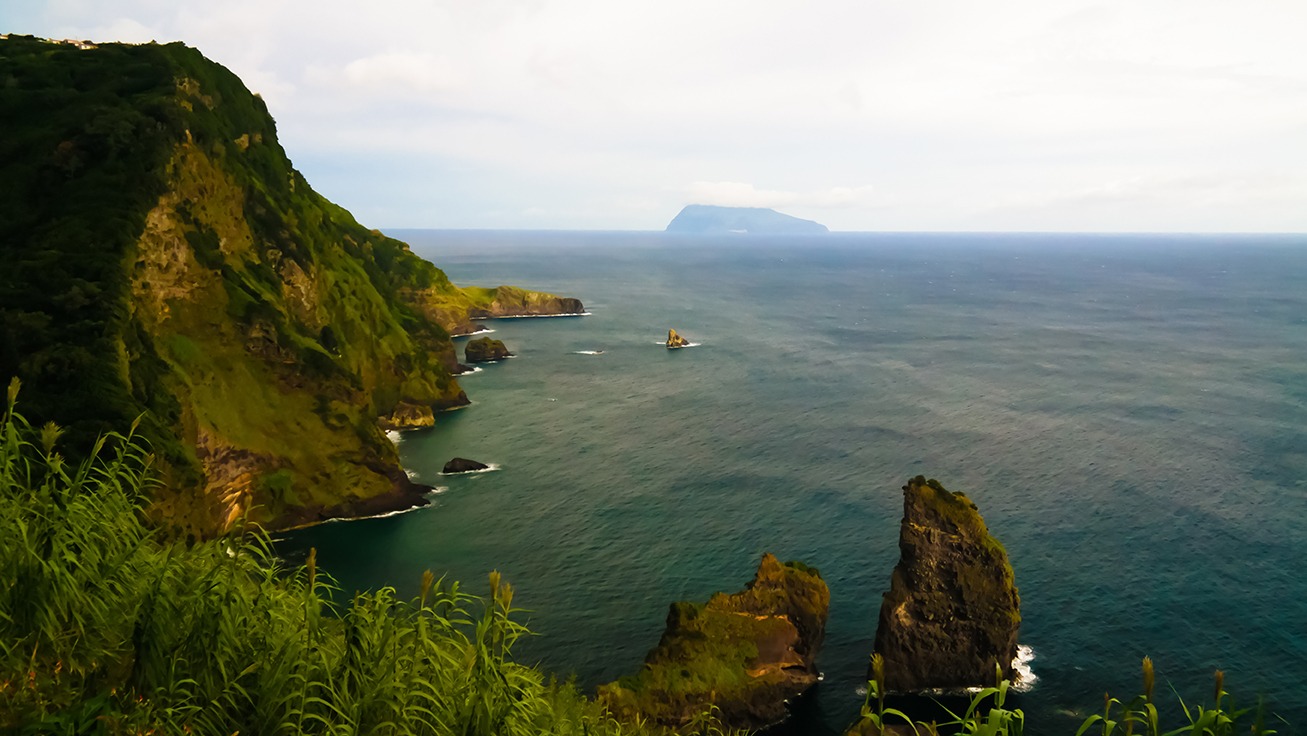
Towering cliffs surround much of the island, creating spectacular viewpoints where visitors can watch waves break against volcanic rock far below. These cliffs also provide nesting habitat for numerous seabird species, making the coastline especially rewarding for wildlife enthusiasts.
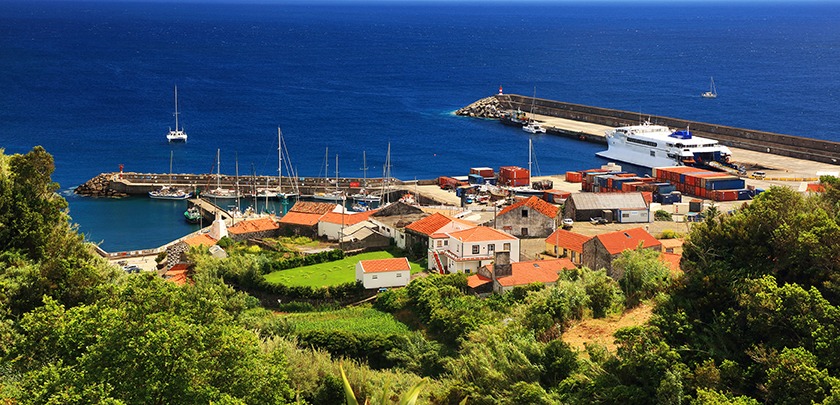
The small harbor at Vila do Corvo has always been the island’s connection to the outside world. For generations, it welcomed fishing boats, supply vessels, and travelers arriving from neighboring Flores.
Today, ferries and small boats continue to link Corvo with the rest of the archipelago during favorable weather.
Walking along the waterfront offers beautiful views toward Flores, whose green mountains rise across the narrow channel. On calm days, the Atlantic reflects the changing colors of the sky, creating peaceful scenes that perfectly capture the island’s character.
Corvo’s coastline isn’t filled with beaches or busy marinas.
Its beauty comes from its honesty.
Sea, stone, and sky.
Family Experiences
Corvo offers families a chance to experience something increasingly uncommon—a place where life remains wonderfully uncomplicated.
Children enjoy the excitement of visiting Portugal’s smallest municipality, hiking to Caldeirão, spotting seabirds soaring above the cliffs, and exploring a village where everything is within walking distance. Families can spend time together exploring quiet trails, enjoying picnics overlooking the Atlantic, or simply watching boats arrive in the harbor. Without traffic, crowds, or long distances, parents often find themselves relaxing just as much as the children.
A day on Corvo encourages conversations, curiosity, and shared discovery. Whether learning about volcanic landscapes, watching migrating birds, or hearing stories from local residents, families leave with memories that are as meaningful as they are unique.
Sometimes the smallest places create the biggest adventures.
Savor Corvo
Corvo’s cuisine reflects the island’s small size, self-sufficiency, and strong sense of community. Meals are built around fresh ingredients gathered from the surrounding Atlantic and the island’s fertile pastures. Fresh fish, octopus, limpets (lapas), locally raised beef, homemade soups, fresh vegetables, and warm bread remain staples of everyday life.
Because Corvo has only a handful of restaurants and cafés, dining here feels wonderfully personal. Family recipes are proudly preserved, and visitors are often welcomed with the same hospitality extended to neighbors and friends.
Traditional Azorean cheeses, locally produced butter, homemade jams, seasonal fruit, and island desserts complete many meals. Simplicity defines the cuisine—but so does quality.
On Corvo, meals aren’t about rushing to the next activity.
They’re another opportunity to slow down, enjoy good company, and appreciate island life.
Local Favorite
Ask someone from Corvo where they like to spend a quiet afternoon, and you probably won’t receive directions to a famous attraction.
Instead, they’ll simply smile and tell you to take a walk.
Walk through the village.
Walk toward the harbor.
Walk until you hear nothing but the wind and the waves.
You’ll soon understand why.
On Corvo, there is comfort in familiarity. Every path eventually leads back home, every face becomes familiar, and every view reminds you how beautifully simple life can be.
Sometimes the greatest luxury isn’t finding somewhere new.
It’s having nowhere you need to be.
Picture Perfect
Corvo may be the smallest island, but it offers some of the most memorable photography in the Azores.
Best Sunrise
Vila do Corvo Harbor
Morning light slowly fills the harbor while fishing boats prepare for another day at sea.
Best Sunset
Western Cliffs
Watch the final rays of sunlight disappear into the Atlantic from one of Europe’s westernmost landscapes.
The Classic View
Caldeirão
The enormous volcanic crater, dotted with lakes and surrounded by green slopes, is the defining image of Corvo.
Worth the Short Walk
Caldeirão Rim Trail
Every step reveals another breathtaking perspective across the crater, the Atlantic, and neighboring Flores.
Most Peaceful Spot
The Village Square
Sometimes the most memorable photograph isn’t a landscape. It’s everyday life unfolding naturally in Portugal’s smallest municipality.
Best Coastal View
Miradouro do Portão
A spectacular overlook where towering cliffs meet the endless Atlantic.
Returning Home:
Reconnecting with Your Azorean Heritage
For many families throughout North America, Corvo represents something much larger than its size. Generations left this small island carrying little more than hope, determination, and a deep sense of community. They settled in places like Massachusetts, Rhode Island, California, Ontario, and beyond, yet many never forgot the village where everyone knew their name.
Today, their children and grandchildren return.
Walking through Vila do Corvo, visiting a family parish, or standing on the rim of Caldeirão often becomes more than a sightseeing experience.
It becomes a homecoming.
Because the island is so small, family histories remain deeply connected to the community. Parish churches, local cemeteries, and municipal archives preserve generations of stories, while longtime residents often remember family names stretching back decades.
Even visitors without ancestral ties quickly understand why Corvo leaves such a lasting impression. It’s impossible to spend time here without appreciating the strength of a community that has flourished together for centuries.
Festivals & Traditions
Life on Corvo revolves around community.
Throughout the year, the island gathers to celebrate faith, family, music, and traditions that have united generations. Festivals here may be smaller than those on neighboring islands, but they offer visitors something increasingly rare—a genuine opportunity to participate rather than simply observe.
On Corvo, everyone is part of the celebration.
Festival of Nossa Senhora dos Milagres
Also called Festa e Romaria de Nossa Senhora dos Milagres, depending on the official municipal usage.
Season: August
The Festival of Our Lady of Miracles is Corvo’s most important annual celebration. Residents, returning emigrants, and visitors gather for religious ceremonies, colorful processions, concerts, traditional music, community meals, fireworks, and celebrations that fill the village with joy.
For many Corvinos living abroad, this festival is the highlight of the year and the perfect opportunity to reconnect with family and lifelong friends.
What You'll Experience
Travel Tip: Accommodations on Corvo are extremely limited. Reserve your stay as early as possible if visiting during the festival.
Festas do Espírito Santo (Holy Spirit Festivals)
Season: Spring through Early Summer
Like every island in the Azores, Corvo celebrates the Holy Spirit Festivals, honoring centuries-old traditions of generosity, faith, and community.
Decorated chapels, religious ceremonies, shared meals, and village gatherings reflect values that remain central to everyday life.
What You'll Experience
Travel Tip: Visitors are warmly welcomed and encouraged to participate respectfully in these meaningful celebrations.
Christmas & Easter Traditions
Christmas and Easter remain deeply cherished on Corvo.
The entire community comes together for church services, family meals, seasonal music, and traditions that have been lovingly preserved across generations.
Visiting during these holidays offers a rare opportunity to experience the island at its most heartfelt and authentic.
Planning Your Visit
Festival dates vary each year, particularly religious celebrations that follow the liturgical calendar. Because accommodations are limited, visitors planning to attend festivals should reserve lodging and transportation well in advance. Ferry service between Flores and Corvo is weather-dependent, so always allow flexibility in your travel plans.
Frequently Asked Questions
How many days should I spend on Corvo?
One to two days allows enough time to explore Caldeirão, walk through Vila do Corvo, enjoy the island’s viewpoints, and experience its unique atmosphere. Travelers seeking complete tranquility often choose to stay longer.
What is Corvo best known for?
Corvo is famous for Caldeirão, exceptional birdwatching, Portugal’s smallest municipality, dramatic Atlantic scenery, and its welcoming community.
Can I visit Corvo as a day trip?
Yes. Many visitors arrive by ferry or short flight from Flores, although staying overnight allows you to experience the island after most day visitors have departed.
Is Corvo good for birdwatching?
Absolutely. Corvo is internationally recognized as one of Europe’s finest birdwatching destinations, particularly during autumn migration.
Do I need a rental car?
No. Most visitors explore the island on foot, while local taxis provide transportation to Caldeirão if desired.
Is Corvo family-friendly?
Yes. Families enjoy hiking, wildlife, village life, and the relaxed atmosphere that encourages children to explore safely.
Is English widely spoken?
English is spoken by many residents involved in tourism, although learning a few Portuguese greetings is always appreciated.
Until Next Time...
Some islands leave you with photographs.
Flores leaves you with moments.
Perhaps you’ll remember the sound of waterfalls echoing through a quiet valley, the reflection of clouds on a volcanic lake, or the final rays of sunlight disappearing beyond Europe’s western horizon.
Or perhaps you’ll remember something simpler.
The stillness.
The fresh air.
The feeling of standing in a place where nature continues to shape each day.
That’s Flores.
An island that reminds us beauty doesn’t need to announce itself.
It simply exists—for those willing to slow down and notice.
Whether you’ve come to hike, photograph its landscapes, or simply find a little more peace, we hope Flores stays with you long after your journey home.
Every island tells its own story. We hope you’ll discover them all.
Explore the Other Azores Islands
Every island in the Azores offers its own landscapes, traditions, and unforgettable experiences. While Flores is often the first stop for many travelers, it’s only the beginning of the journey.
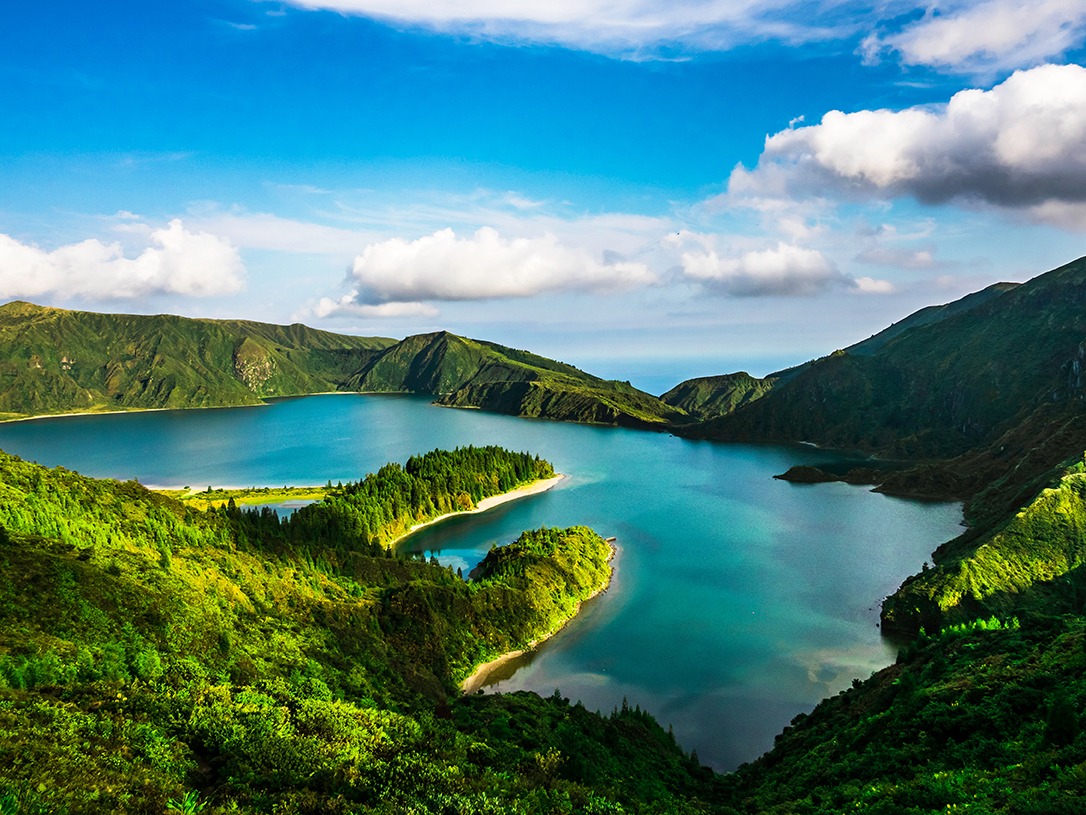
São Miguel
Known as the Green Island, São Miguel is famous for its volcanic crater lakes, geothermal hot springs, lush landscapes, tea plantations, and charming towns. As the largest island in the Azores, it offers the perfect blend of natural beauty, adventure, and local culture.
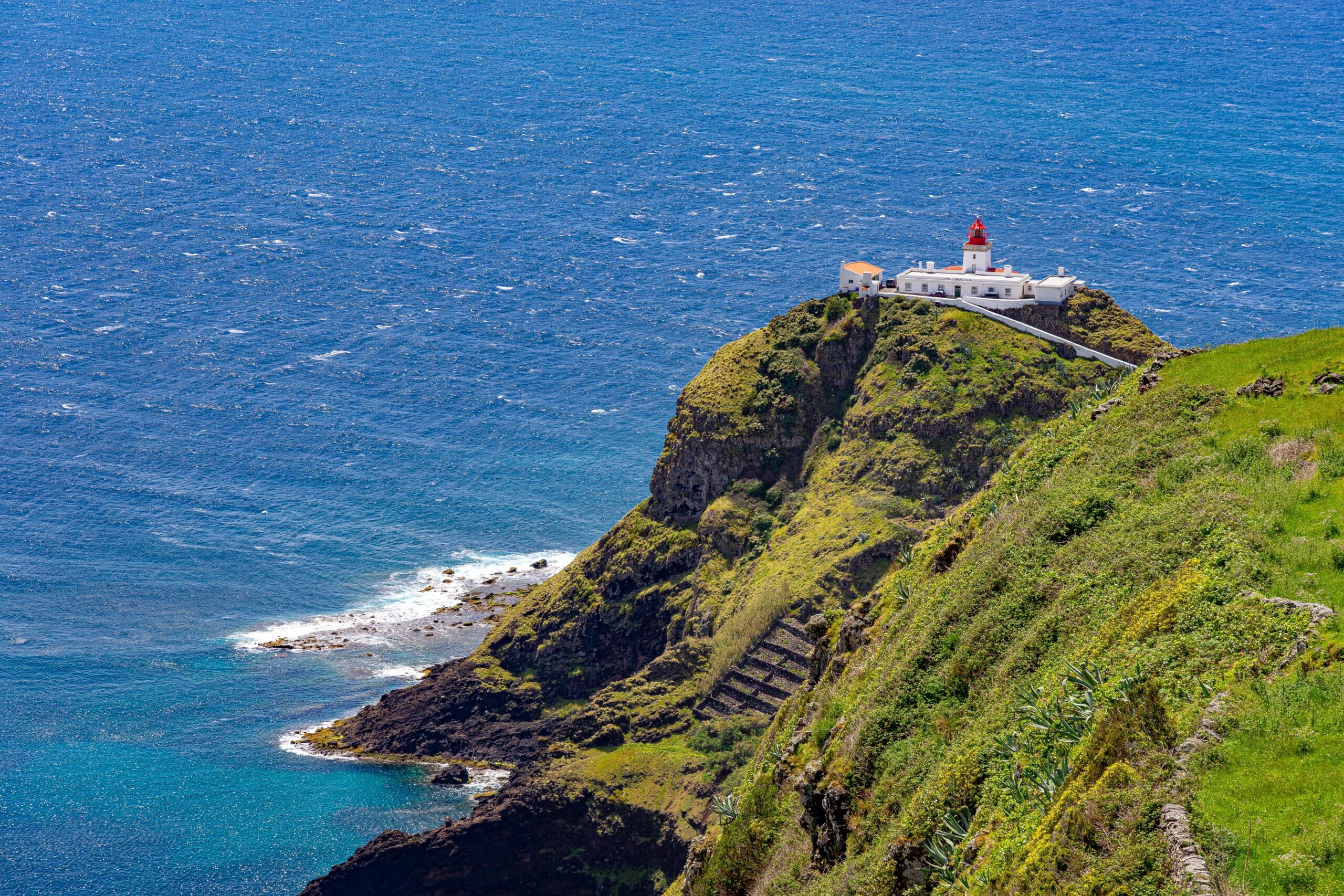
Santa Maria
Known as the Island of the Sun, Santa Maria is famous for its golden sandy beaches, warm climate, fossil-rich coastline, and relaxed pace of life. It’s the perfect destination for visitors looking to unwind while enjoying one of the oldest islands in the archipelago.
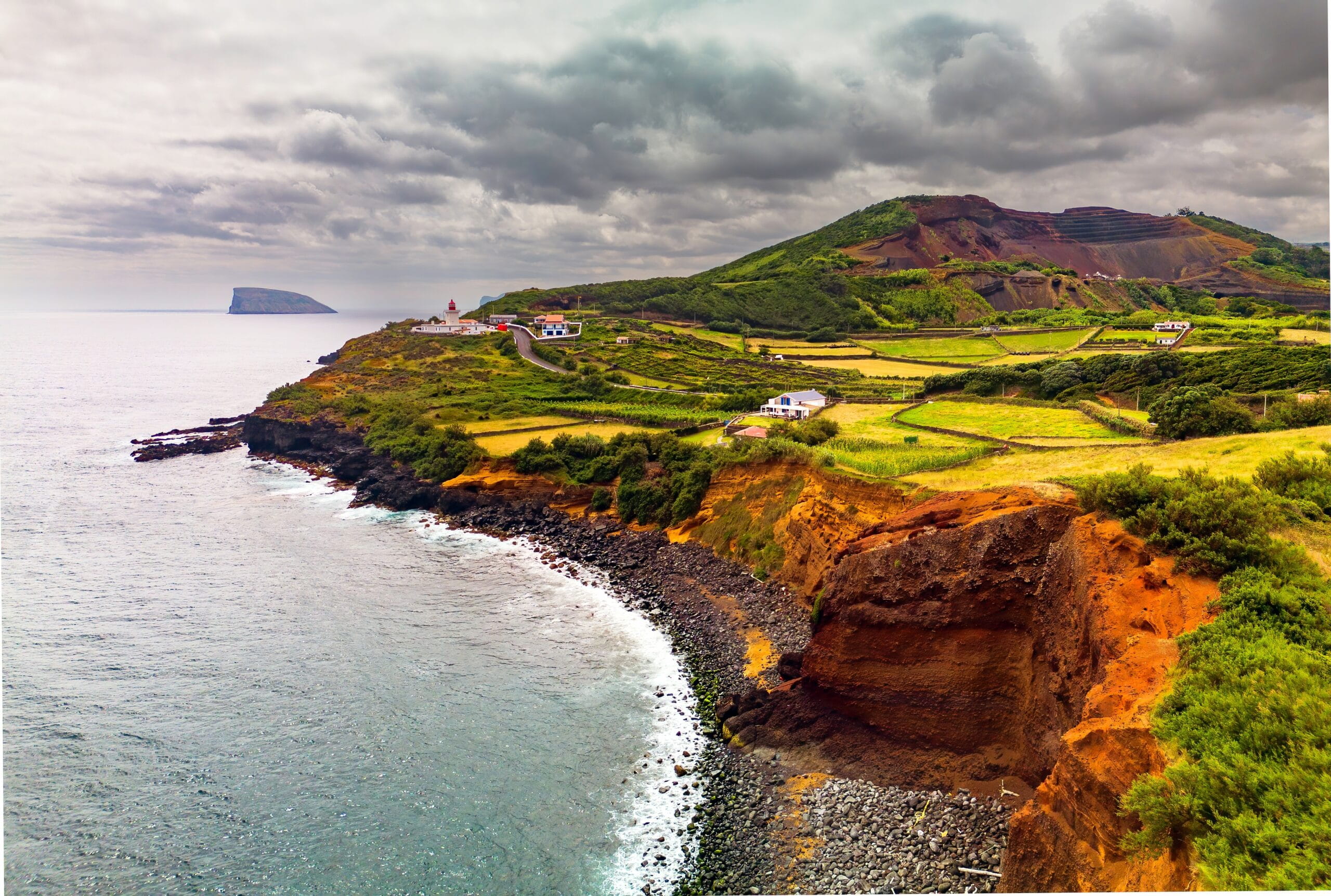
Terceira
A UNESCO World Heritage city, colorful festivals, lively traditions, and centuries of history make Terceira one of the cultural hearts of the Azores. From Angra do Heroísmo to the island’s famous Sanjoaninas celebrations, Terceira is rich in heritage and community spirit.
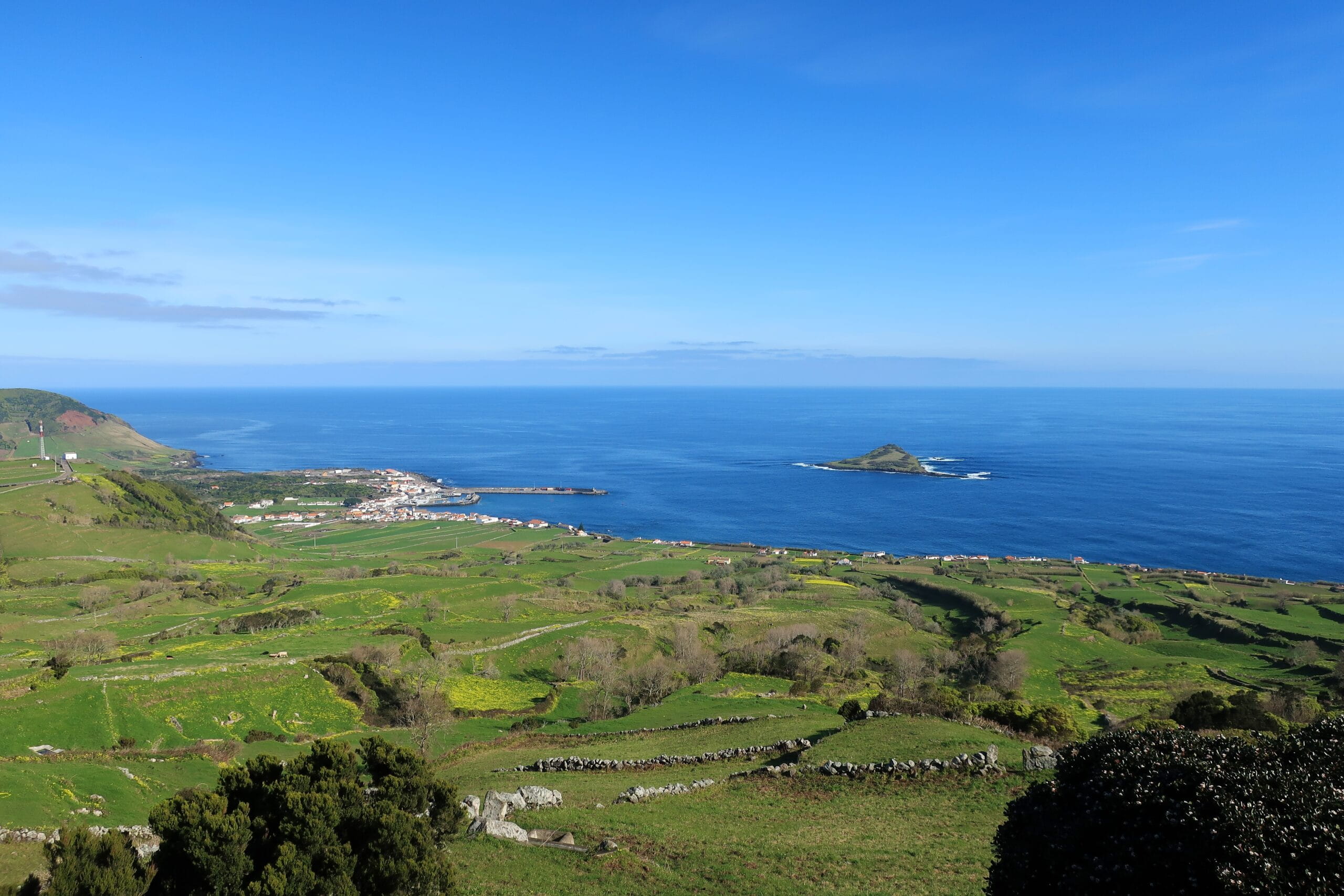
Graciosa
Peaceful, welcoming, and wonderfully unhurried, Graciosa is known for its whitewashed villages, traditional windmills, vineyards, and the remarkable Furna do Enxofre volcanic cave. It’s an island where quiet moments become lasting memories.
São Jorge
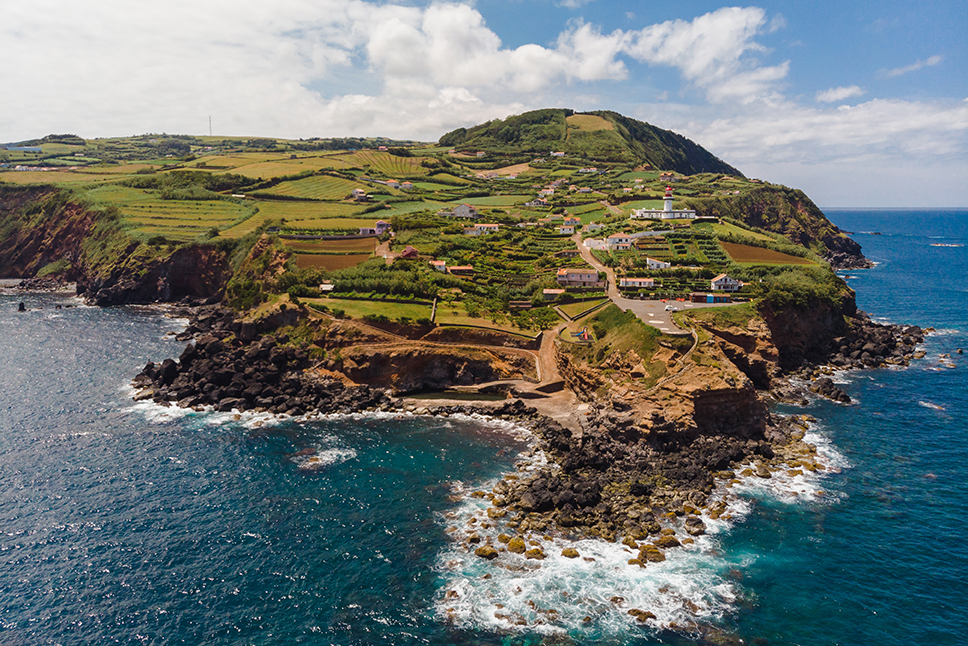
Steep cliffs, dramatic fajãs, scenic hiking trails, and the island’s world-famous cheese define São Jorge. Nature lovers and outdoor enthusiasts will discover breathtaking landscapes unlike anywhere else in the Azores.
Pico
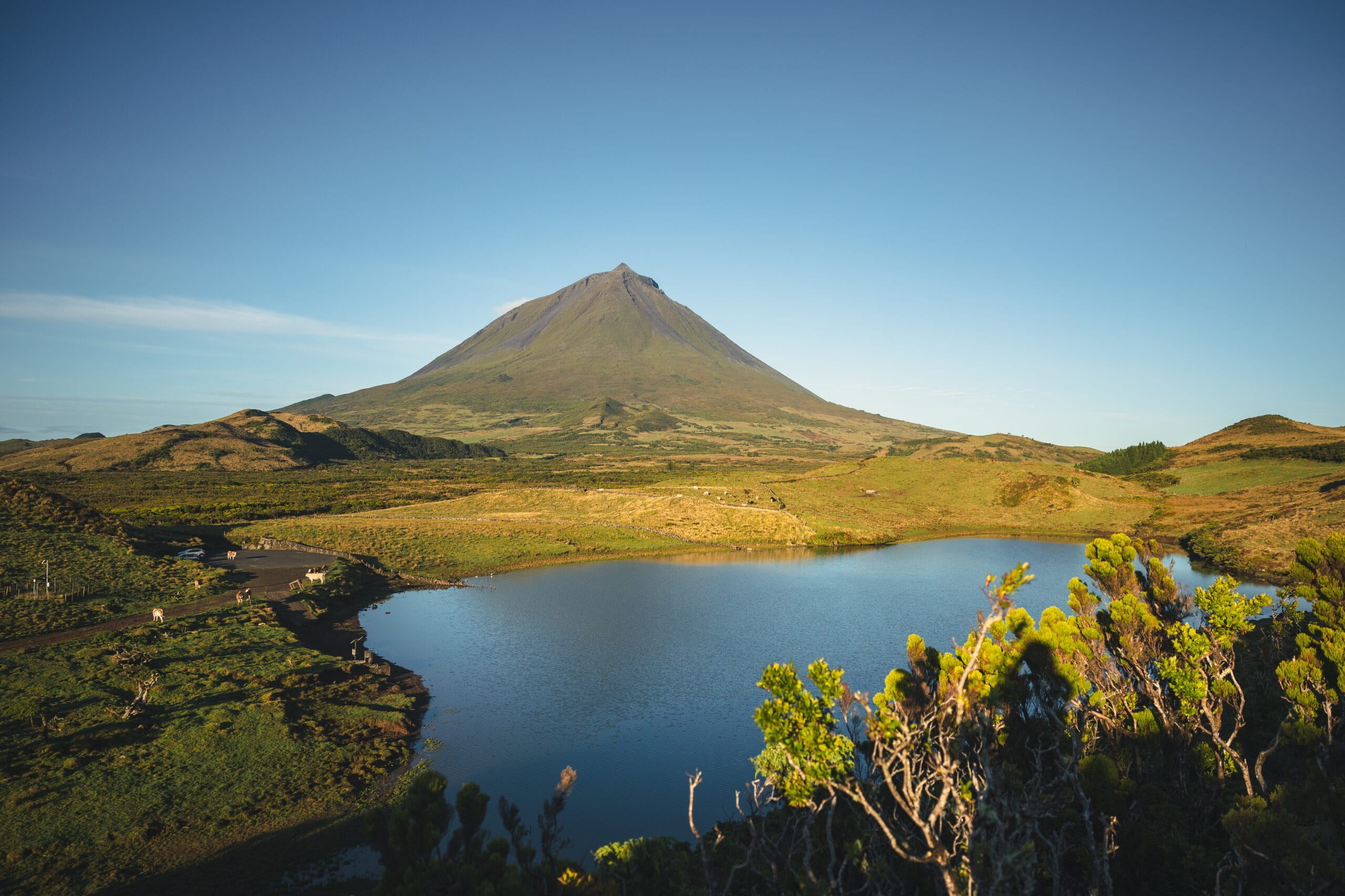
Dominated by Portugal’s highest mountain, Pico combines volcanic landscapes with UNESCO-listed vineyards, a rich whaling heritage, and some of the best whale watching in the Atlantic. It’s an island that celebrates both the sea and the mountain that gives it its identity.
Faial
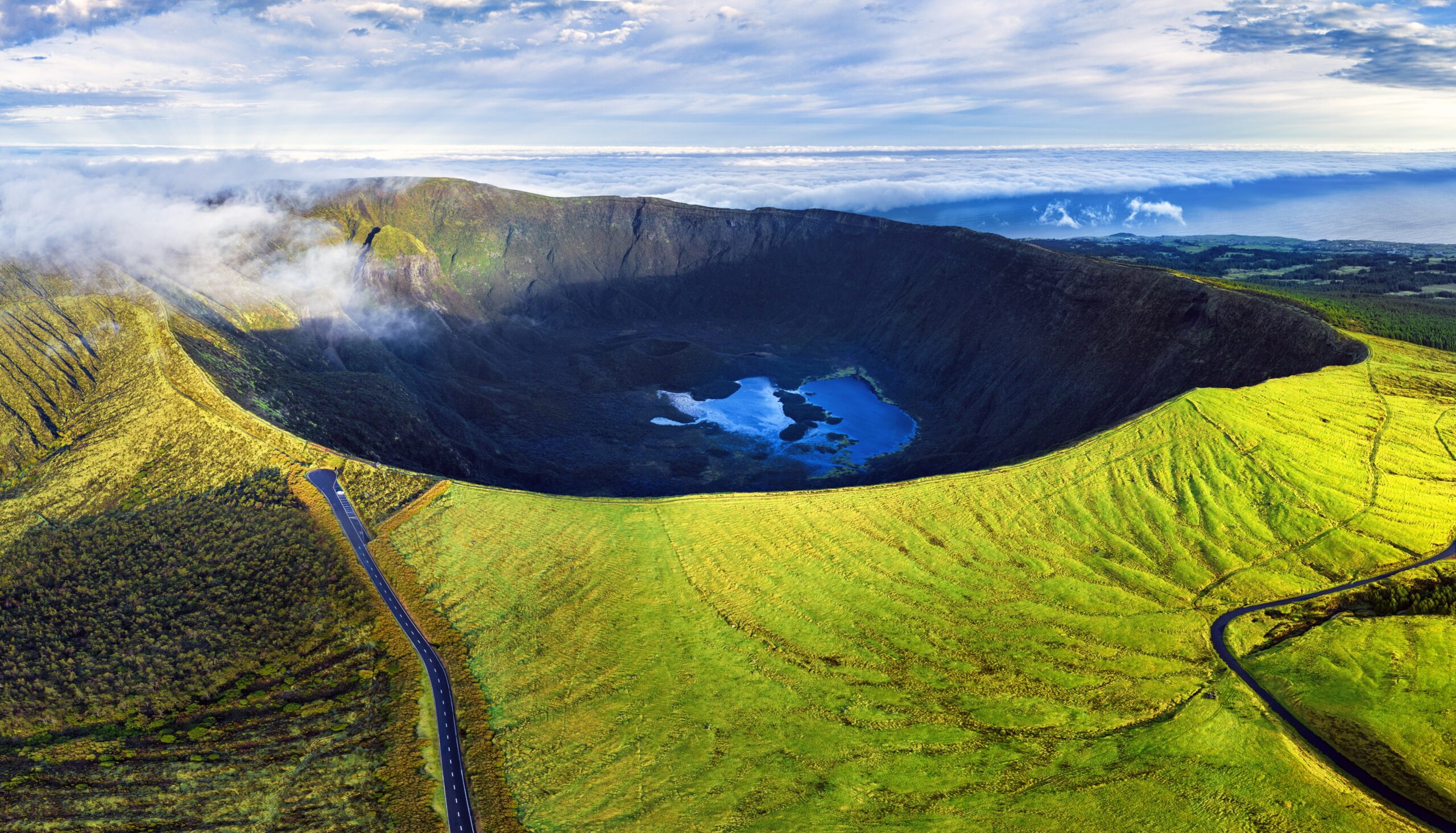
Known as the Blue Island, Faial welcomes sailors from around the world to the historic marina in Horta. Visitors also come to explore the dramatic Capelinhos Volcano, walk the rim of the Caldeira, and enjoy spectacular views of neighboring Pico.
Flores
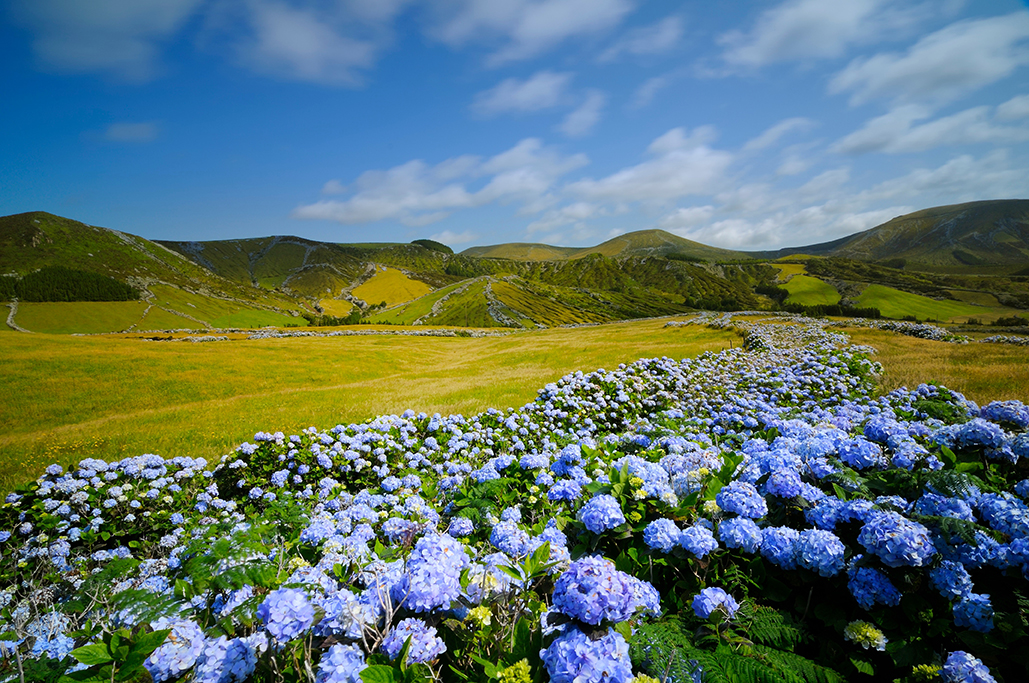
Often considered one of Europe’s most beautiful islands, Flores is a paradise of waterfalls, crater lakes, lush valleys, and dramatic cliffs. Nature is never far away, making every drive and every hike unforgettable.